WHO validation opened global markets
Comparative studies supported Shanvac-B’s safety and efficacy, while WHO prequalification opened international procurement markets.
From the historical record · 1992–2009
The full story of Shantha Biotechnics, the pursuit of an affordable hepatitis-B vaccine and the foundational scientific role of Dr Gita Sharma.
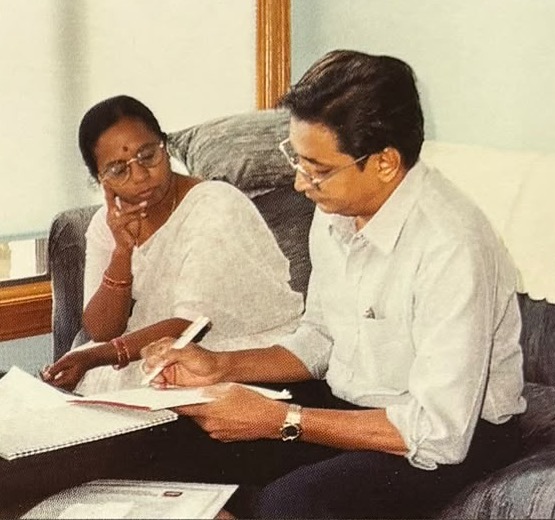
In the early 1990s, India had scientific talent but no established pathway for taking a recombinant-DNA healthcare product from a university laboratory through regulation, manufacture and mass use. Shantha Biotechnics would help create that pathway—and Dr Gita Sharma supplied much of its earliest scientific direction.
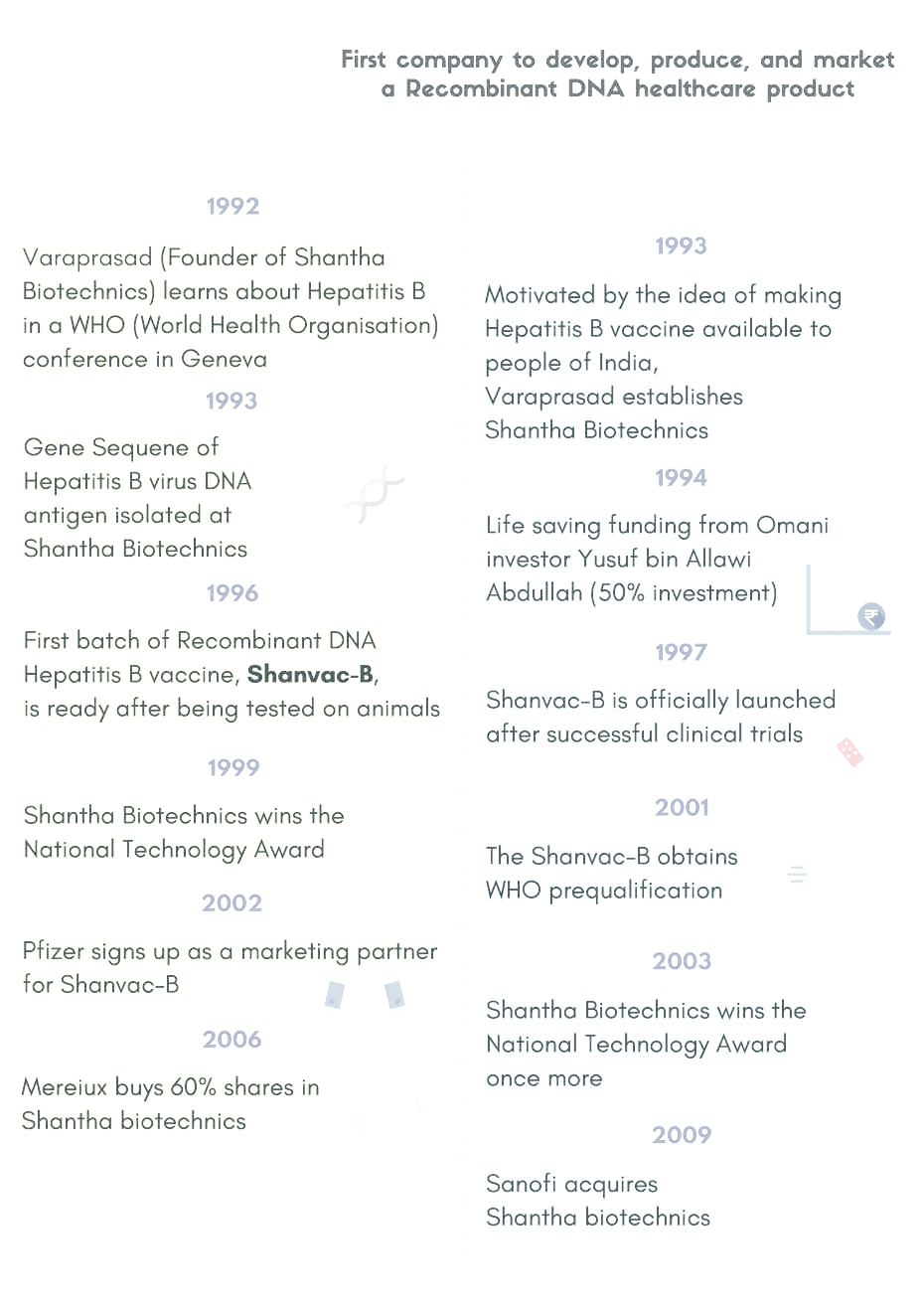
The idea began with K. I. Varaprasad Reddy, an electronics engineer from Hyderabad. At a World Health Organization meeting in Geneva, he learned both the scale of hepatitis B and the economics surrounding its prevention. Imported vaccine cost roughly ₹750–850 per dose, while a full course required three doses. For most Indian families, vaccination was therefore out of reach.
Reddy returned determined to develop an affordable Indian vaccine. The ambition initially met scepticism: biotechnology ventures were unfamiliar, technology transfer was inaccessible and even official paperwork had no obvious administrative home. The absence of precedent became the central obstacle—and ultimately Shantha’s most important contribution to the companies that followed.

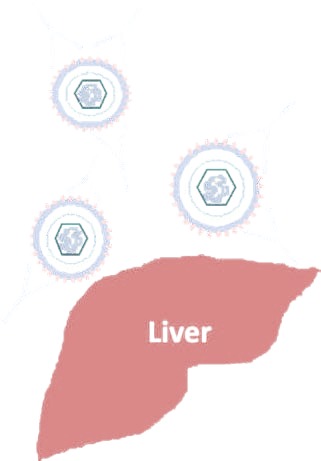
people were estimated to be living with hepatitis-B infection in the WHO data reproduced by INSA.
The scientific foundation · Osmania University, 1993
The venture found its first home in a refurbished room in Osmania University’s Department of Microbiology. Dr Sharma was then a full-time faculty member with international research experience in interferon biology and molecular science. She became the scientific interpreter the new enterprise needed—helping shape the hepatitis-B vaccine proposal while also initiating work on interferons.
She identified the first instruments and chemicals, recruited biotechnicians and led the small scientific group assembled at Osmania. With mentorship from Dr Guntaka Rami Reddy at the University of Missouri, she advanced the work to isolate the DNA sequence for the hepatitis-B surface antigen by the end of 1993. That was the first decisive laboratory step toward the vaccine.
A hepatitis-B vaccine does not need to contain the complete virus. It can use a purified surface antigen: a molecular feature that teaches the immune system what to recognise. The genetic instructions for that antigen are inserted into a host organism, which is grown at scale. The antigen is then recovered, purified and formulated as a vaccine.
Shantha’s process used the yeast Pichia pastoris. The choice, together with a robust purification method, became a major process innovation. It delivered better yields, supported two process patents and made commercial production possible.

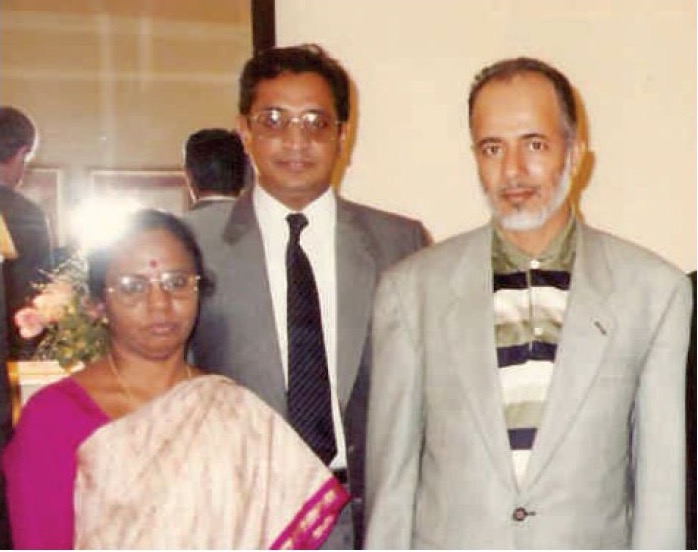
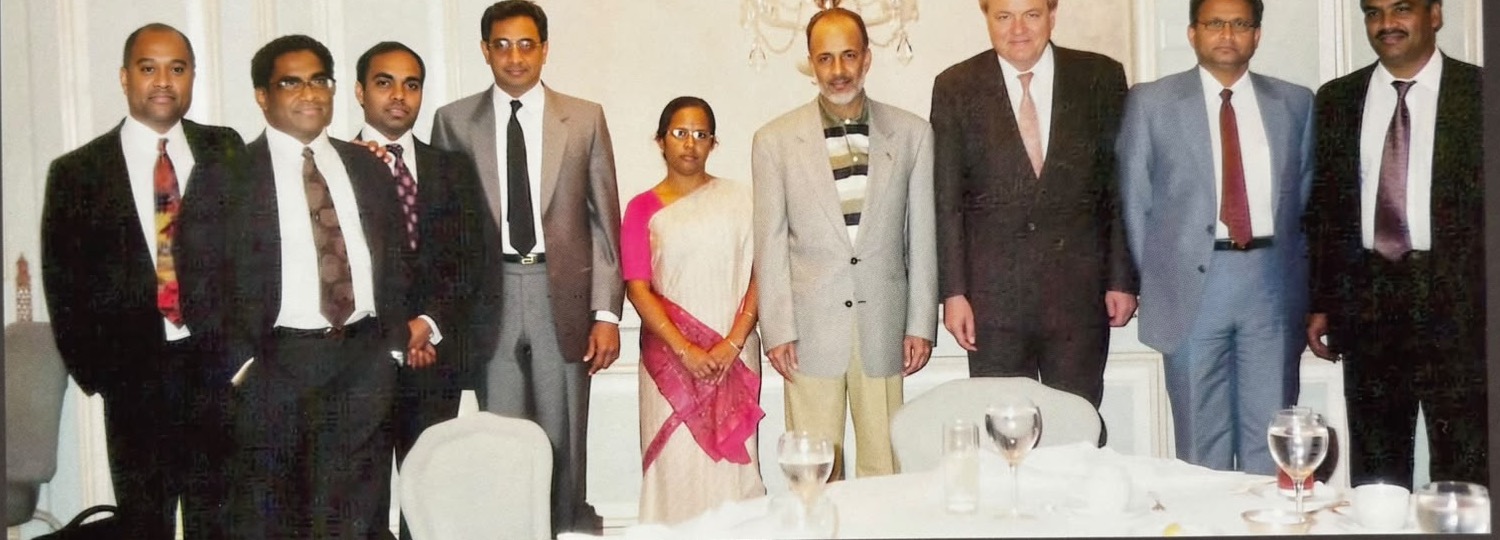
The original ₹1.9 crore seed capital could not carry the work through expression studies and scale-up. In 1994, Omani Foreign Minister Yousuf Bin Allawi Abdulla and his representative Khalil Ahmed invested ₹1.9 crore for a 50 percent stake and helped arrange further low-cost financing. The relationship had been encouraged by former Prime Minister P. V. Narasimha Rao.
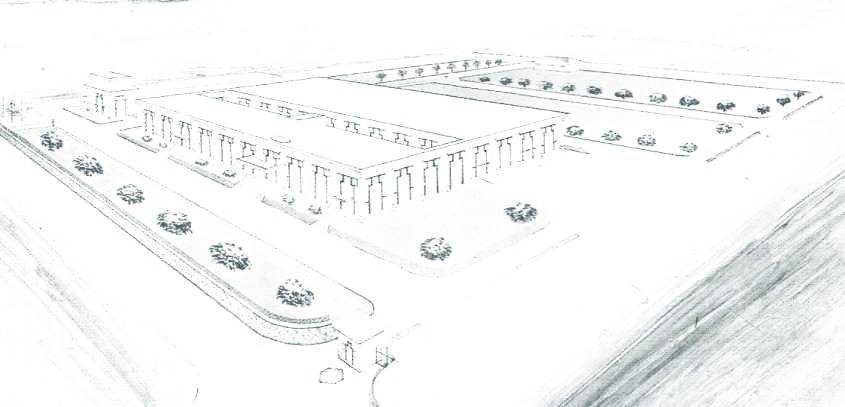
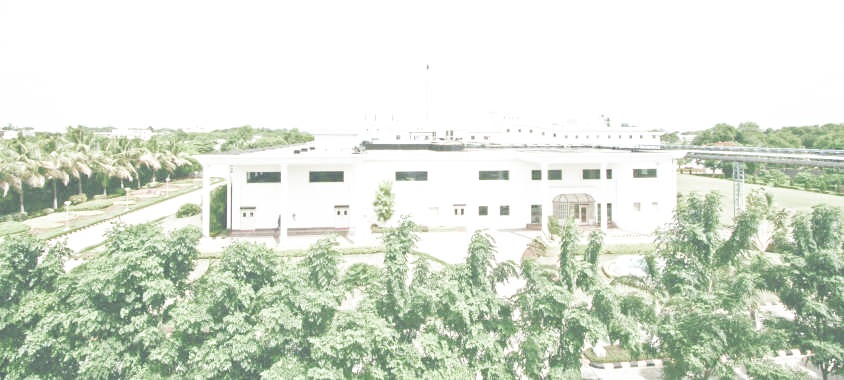
Indian scientific and public institutions also became vital partners. Dr P. M. Bhargava and Chandana Chakrabarty helped the team understand production-facility design. The Technology Development Board—under the Department of Science and Technology— later supported Shantha with ₹8 crore for large-scale facilities. The account also credits Health Minister Dr Harshvardhan with supporting the company’s licence application.
From laboratory to production
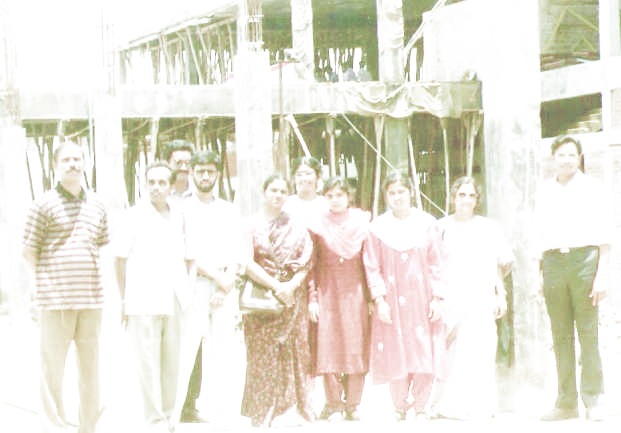
When the work outgrew its first Osmania room, Shantha spent about a year and a half at the Centre for Cellular and Molecular Biology. CCMB brought high-end facilities, scientific validation and the characterisation work needed after antigen cloning. Dr Sharma remained at Osmania and transferred the initial work to Dr K. S. N. Prasad; Dr Revathi Chaganti joined the programme and later became central to Shantha’s purification, recombinant-protein and product-development work.
The breakthrough
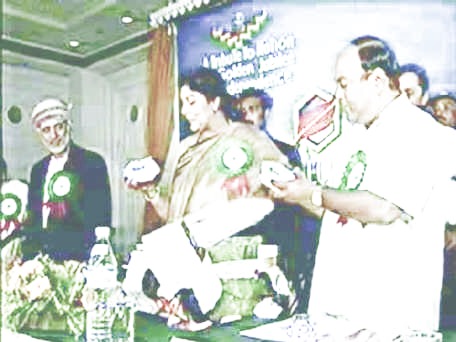
The first experimental batch was ready in 1996. Nizam’s Institute of Medical Sciences in Hyderabad partnered on human trials, with later efficacy studies at NIMS and King Edward Memorial Hospital in Mumbai. After regulatory review, Shanvac-B launched on 18 August 1997 in the presence of Union and Andhra Pradesh ministers.
Shantha had insisted on an affordable product. It chose to build its own marketing operation rather than price close to an imported competitor. By March 1998, the company had sold approximately 1.8 million doses at ₹50 each. When distribution margins pushed up retail prices, partnerships with medical associations and volunteer doctors enabled mass-immunisation camps. Adult doses were offered at ₹50 and children’s doses at ₹25.
The historical account describes some 35,000 doctors volunteering and around 30,000 children being vaccinated on a typical Sunday across the programme. Sales reached 22 million doses in 1998 and grew sharply in the years that followed.
The precedent
Comparative studies supported Shanvac-B’s safety and efficacy, while WHO prequalification opened international procurement markets.
An affordable domestic vaccine disrupted a market dominated by costly imports and expanded access through mass immunisation.
Every approval Shantha secured made the route clearer for the recombinant-DNA ventures that followed.
Shantha became an early foundation for the companies, research organisations and biotechnology parks that formed Genome Valley.
Shantha reinvested a substantial share of profits in research and pursued projects spanning rotavirus, pneumococcal, varicella, meningococcal, DPT and Hib vaccines. It developed or advanced interferon alpha-2b, oral cholera, pentavalent, tetanus, polio and combination vaccines. Four products received WHO prequalification.
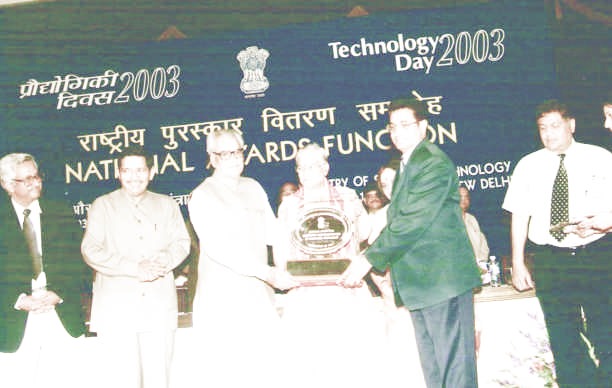
The scientific culture extended well beyond the founding team. Dr Revathi Chaganti helped strengthen recombinant-protein expression and purification, including work that led to Shanferon. The company’s National Technology Awards recognised both Shanvac-B and later process innovation.
A global vaccine company
By the early 2000s, Shantha was supplying international immunisation programmes, exporting to more than ten countries and working with partners including Pfizer, UNICEF and the International Vaccine Institute. Mérieux Alliance acquired a majority position in 2006, retaining the Shantha name and its affordable-healthcare focus.
Sanofi Pasteur acquired the Mérieux-held stake in 2009. The combination gave Shantha access to wider markets and manufacturing scale, while later products included Shanchol, Shan5 and an inactivated polio vaccine. What started in a small university room had become part of a global vaccine network.
Giving the beginning its proper credit
K. I. Varaprasad Reddy supplied the mission, persistence and entrepreneurial drive. Dr Gita Sharma converted that mission into an executable scientific programme: framing the proposal, establishing the laboratory requirements, building and leading the first research team and advancing the antigen work on which development depended.
Many scientists and institutions carried the work forward. Giving Dr Sharma full credit does not diminish that collective achievement; it restores a foundational scientist to the centre of a nationally important biotechnology story.
Source & image credits
This page is an original retelling based primarily on Adita Joshi’s chapter, “Provocation, precedence and innovation: How Shantha Biotechnics shaped India’s biotechnology future,” in Indian Science: Transforming India, published by the Indian National Science Academy. Historical images and graphics are reproduced from that chapter; individual photo credits are shown beneath each image.
Open the INSA volume